
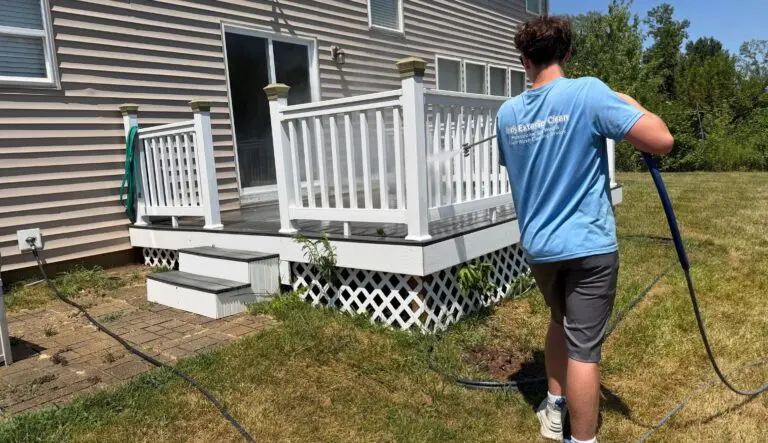
Yes, pressure washing can remove paint. However, whether paint comes off depends on the condition of the paint, the surface underneath, the amount of pressure being used, and the cleaning method.
If you’re trying to clean a painted exterior, it’s important to understand how pressure washing can affect the paint before getting started.
When Can Pressure Washing Remove Paint?
Pressure washing is designed to remove dirt and buildup, but enough pressure can also remove paint. Paint that is already loose, peeling, or flaking is especially likely to come off during cleaning.
Paint that is firmly bonded to the surface is less likely to be removed with lower-pressure cleaning. However, increasing the pressure or using a concentrated spray can damage the paint or the surface underneath it.
The type and condition of the surface also matter. Wood and other softer materials can be damaged more easily than harder surfaces such as concrete or brick.
Does Higher PSI Remove More Paint?
PSI, or pounds per square inch, measures the pressure produced by a pressure washer. In general, higher pressure increases the potential for removing paint, but PSI alone does not determine whether a surface will be damaged.
As a general guideline:
- 1,500–2,000 PSI: Typically used for general cleaning and may remove loose or failing paint.
- 2,000–3,000 PSI: More aggressive and can remove paint from some surfaces when used carefully.
- 3,000+ PSI: Can strip paint more quickly, but also increases the risk of damaging wood, siding, and other softer materials.
These ranges are only general guidelines. The appropriate pressure depends on the material, condition of the surface, and cleaning method.
Does the Nozzle Affect Paint Removal?
Yes. The spray tip can make a significant difference in how aggressively water hits the surface.
A 15-degree or 25-degree nozzle can provide more concentrated cleaning than a wider-angle tip. A 0-degree nozzle creates a very concentrated stream and can damage or gouge surfaces, so it is generally not appropriate for routine exterior cleaning.
Distance matters, too. Keeping the nozzle approximately 8–12 inches from the surface and testing a small, inconspicuous area first can help determine how the surface responds.
Pressure, nozzle selection, distance, and technique all work together. Increasing the PSI isn’t always necessary to remove buildup and can create unnecessary risk when working around painted surfaces.
Should You Use Pressure Washing to Remove Paint?
If the goal is to completely remove paint, pressure washing is generally not the preferred method. While it can remove loose or failing paint, relying on high pressure to strip a painted surface can damage wood, siding, and other materials.
For dedicated paint removal projects, a professional may recommend a paint-stripping method that is better suited to the specific surface and type of paint.
Pressure washing can still be useful for preparing a surface before painting by removing dirt, mildew, chalking paint, and other surface buildup. The cleaning method should be adjusted based on the material and condition of the surface.
What If You Want to Protect the Paint?
If you’re cleaning a painted surface and want to avoid removing the existing paint, soft washing may be the better option. Soft washing uses lower pressure along with appropriate cleaning solutions to address dirt, algae, mildew, and other organic buildup without relying on aggressive pressure.
This can be especially useful for painted siding and other exterior surfaces where maintaining the existing finish is a priority.
What About Older Paint?
If a building was painted before 1978, there is a possibility that the paint contains lead. Disturbing lead-based paint can create hazardous dust or debris, so older painted surfaces should be approached carefully and handled according to applicable safety requirements.
The EPA’s lead-safe renovation, repair, and painting program provides additional information about working safely around potentially lead-based paint.
When you’re unsure about the age or condition of the paint, it’s best to have the surface evaluated before attempting pressure washing or paint removal.
The Right Cleaning Method Depends on the Surface
Pressure washing can remove paint, but that doesn’t mean it should be used as the primary method for stripping paint. The safest approach depends on what you’re cleaning, the condition of the existing finish, and your end goal.
If you want to clean a painted exterior without unnecessarily damaging the finish, a professional can help determine whether pressure washing, soft washing, or another cleaning method is appropriate.
Have questions about cleaning your home’s exterior? Contact Indy Exterior Clean to find the right approach for your property.