
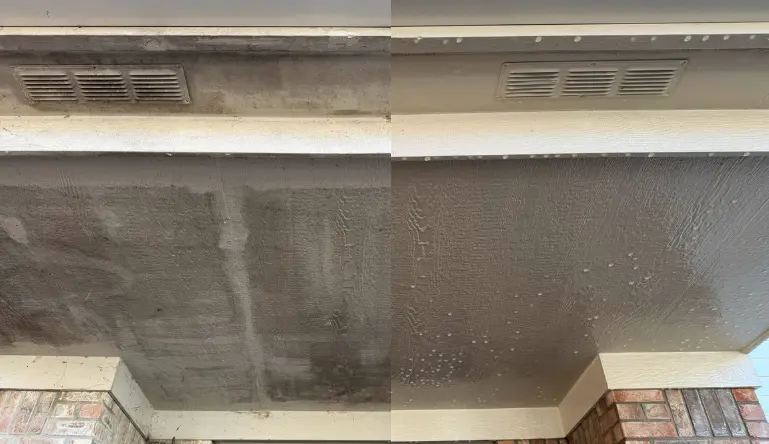
Pressure washing is a highly effective way to clean exterior surfaces, but it is not safe for everything. Using too much pressure, or using it on the wrong material, can lead to permanent damage and costly repairs.
Below are common surfaces that you should never pressure wash, especially for Indiana homes exposed to seasonal moisture, freeze-thaw cycles, and aging exterior materials.
1. Roofs (Especially Asphalt Shingles)
Pressure washing a roof can do more harm than good. Asphalt shingles are designed with protective granules that help shield your home from UV damage and weather exposure.
High pressure can:
- Strip protective granules
- Shorten roof lifespan
- Cause leaks and water intrusion
Safer alternative: Soft washing using low pressure and a roof-safe cleaning solution.
2. Old or Damaged Brick & Mortar
Brick exteriors, especially older homes, can be vulnerable to high pressure.
Pressure washing may:
- Erode mortar joints
- Crack aging brick
- Force water behind the wall system
Homes in historic areas or older Indiana neighborhoods are especially at risk.
3. Painted Wood or Siding
Wood and painted surfaces require careful cleaning. High pressure can easily cause visible and structural damage.
Risks include:
- Stripping paint
- Gouging wood surfaces
- Forcing water behind siding (leading to rot and mold)
4. Windows & Window Seals
Windows are not designed for direct high-pressure contact.
Pressure washing can:
- Crack or weaken glass
- Damage seals and insulation layers
- Push water into interior spaces
Older windows are particularly vulnerable.
5. Electrical Panels, Meters & Outdoor Outlets
You should never pressure wash these areas directly.
Water exposure combined with electrical components creates a serious safety risk. Avoid spraying:
- Electrical meters
- Outdoor outlets
- Exterior light fixtures
6. Stucco
Stucco surfaces can appear durable, but they are sensitive to high pressure.
Pressure washing can:
- Crack the exterior finish
- Force moisture into the wall system
- Lead to hidden mold or interior damage
Low-pressure cleaning is the only safe approach.
7. Outdoor Furniture (Certain Materials)
Not all outdoor furniture is built for high-pressure cleaning.
Never pressure wash:
- Wicker
- Older or weathered wood
- Resin furniture
- Loose or aging assembled pieces
Damage can include cracking, splintering, or structural loosening.
8. Gravestones & Memorials
Older stone materials require careful handling.
High pressure can permanently damage:
- Limestone
- Sandstone
- Marble
Erosion from improper cleaning is often irreversible.
Overall
Pressure washing is effective, but it is not universal. Choosing the wrong surface can lead to unnecessary repairs and long-term damage.
When in doubt, softer cleaning methods or professional exterior cleaning services are the safer option. Our team can help you identify the right cleaning method for each surface and prevent costly damage.
Never pressure wash without first understanding the surface you are working with. What seems like a quick clean can easily turn into avoidable damage.