
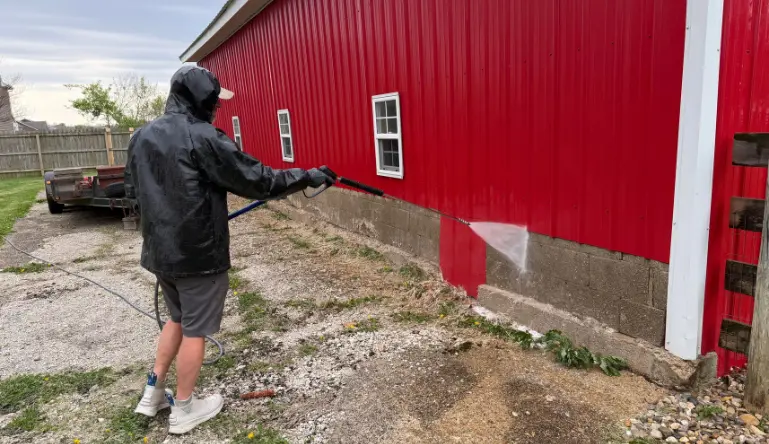
Pressure washing can be an effective way to clean exterior surfaces, but it becomes dangerous quickly without the right knowledge and experience. The equipment is powerful enough to cause injuries and significant property damage when used incorrectly.
Understanding the risks of trying to pressure wash without proper training helps homeowners make safer decisions about exterior cleaning.
High-Pressure Water Can Cause Serious Injury
Commercial pressure washers produce extremely strong force.
Without training, they can:
- Cut or damage skin
- Inject water and bacteria under the skin
- Turn minor mistakes into medical emergencies
Even brief contact with high-pressure spray can result in serious injury when pressure washing is performed incorrectly.
Homes Can Be Damaged in Seconds
Incorrect pressure settings or nozzle choices can cause immediate and expensive damage.
Common issues include:
- Cracked vinyl siding
- Gouged wood surfaces
- Etched concrete
- Stripped paint
- Broken window seals
- Water forced behind siding
Repairs often cost far more than hiring a professional in the first place.
Chemical Use Requires Knowledge
Many exterior cleaning jobs involve detergents and bleach-based solutions.
Without proper training, risks include:
- Damaging landscaping and plants
- Surface discoloration or corrosion
- Harmful chemical fumes
- Skin or eye irritation
Proper dilution and application are critical when working around a home.
Electrical and Safety Hazards
Water near electricity creates serious risk.
Danger areas include:
- Outdoor outlets
- Light fixtures
- Extension cords
- Electrical panels or meters
This is one of the most overlooked dangers when people try to pressure wash without proper training.
Slip and Fall Risks Are Common
Wet surfaces become extremely slippery during cleaning.
Additional risks include:
- Ladder instability
- Spray gun recoil
- Working on sloped surfaces
- Overreaching or loss of balance
Falls are one of the most common injuries in DIY pressure washing.
Not All Surfaces Can Handle High Pressure
A major mistake is assuming high pressure is safe for all materials.
In reality:
- Roofs require soft washing
- Vinyl siding needs low pressure
- Stucco can crack easily
- Painted surfaces can strip
Using the wrong method can permanently damage your home.
Pressure Washing Equipment Can Be Hazardous
Pressure washing systems include:
- High-pressure pumps
- Gas engines
- Hot water units
- Heavy-duty hoses
Without training, these tools can be difficult to control safely.
What Professional Pressure Washing Training Covers
Trained technicians learn how to safely manage:
- Pressure levels and nozzle selection
- Chemical mixing and application
- Surface identification
- Overspray control
- Ladder and roof safety
- Property protection techniques
- Injury prevention
Final Takeaway
Pressure washing is not just about power. It is about control, technique, and knowing the right method for each surface. When you pressure wash without proper training, the risk of injury and damage increases significantly.
If you are unsure what your home needs, Indy Exterior Clean can safely evaluate your exterior and provide professional cleaning using the correct methods for each surface type near Indianapolis.